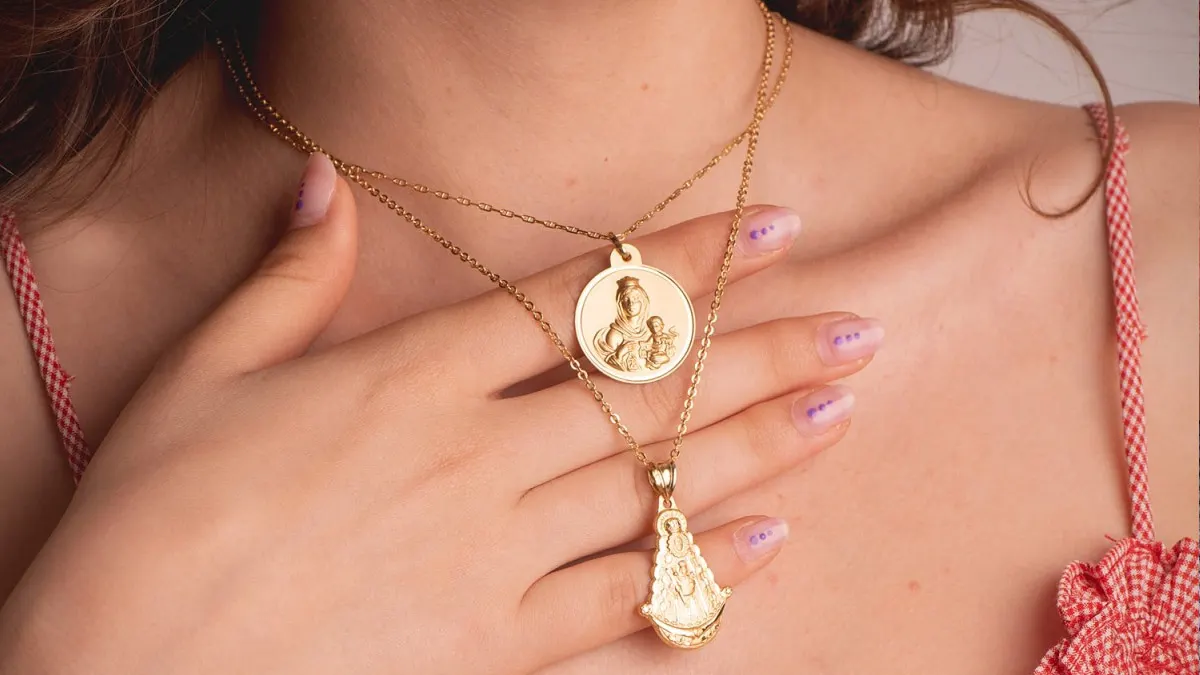
There are objects that survive trends because they do not depend on them. Religious medals are one of those rare cases where tradition, faith, and even aesthetics come together without too much conflict. You don't have to be particularly devout to wear one: many people inherit them, receive them as gifts, or simply like what they represent, even if they can't fully explain why they wear them.
A Small Object with Great Symbolic Weight
Before delving into each model, it's worth clarifying something: a religious medal is never "just a piece of jewellery". It may seem so on the outside, but inside it carries centuries of history, popular devotion, and, in some cases, even legends that sound almost cinematic. Each design corresponds to a specific figure and a very human need: protection, hope, gratitude, or simply the desire to feel accompanied in daily life.
The Saint Benedict Medal, Protection Against the Invisible
We start with one of the oldest and also one of the most symbolically "loaded". The Saint Benedict medal is filled with Latin inscriptions that, summarised, say something like "stay away, evil, there is no place for you here". Traditionally, it has been associated with spiritual and physical protection, and it is not uncommon to see it in homes, cars, or even hanging near the front door. In short, its reputation as an "anti-bad vibes medal" is not a coincidence.
The Miraculous Medal and the Virgin's Promise
Its origin is linked to Marian apparitions in the 19th century that, according to tradition, included very specific instructions on how the medal should be made. Hence the name: Miraculous, without half-measures. It is especially associated with the protection of the Virgin Mary and the grace that, according to popular belief, is received simply by wearing it with faith. It is common to find it at baptisms and first communions, almost like a classic that never goes out of style.
The Medal of Our Lady of the Pillar, Symbol of Zaragoza and More
Here things become particularly endearing for those with Aragonese roots, although its devotion has travelled far beyond Zaragoza. Our Lady of the Pillar is one of the most beloved Marian advocations in Spain, and her medal is often given during important moments: communions, trips, or simply as a gift for someone special. Those seeking something with a more durable finish and added value opt for a gold medal of Our Lady of the Pillar, designed to become those pieces that are passed down from generation to generation without losing their shine or meaning.
Saint Jude Thaddeus, the Patron of Difficult Causes
If you've ever heard the saying "entrust yourself to Saint Jude Thaddeus when there is nothing left to do", you're on the right track. This apostle has earned the reputation of being the patron of lost and desperate causes, and his medal is worn especially in times of uncertainty: a complicated illness, a delicate financial situation, or simply those days when everything seems to go wrong at once. It makes sense: when you no longer know who to ask for help, there's always the option to aim higher.
The Scapular, a Piece That Is More Than Just Jewellery
And we come to a piece different from the previous ones, because technically it is not a medal, although it serves a very similar function. The scapular consists of two small pieces of fabric or metal joined by cords, which are worn over the chest and back. Its origin is linked to religious orders and promises of spiritual protection, and its use has remained almost intact for centuries, which already says a lot about its symbolic weight. Those looking for a scapular often value both the meaning and the quality of the materials, because in the end it is a piece that is worn close to the body day after day.
More Than an Accessory, a Way to Feel Accompanied
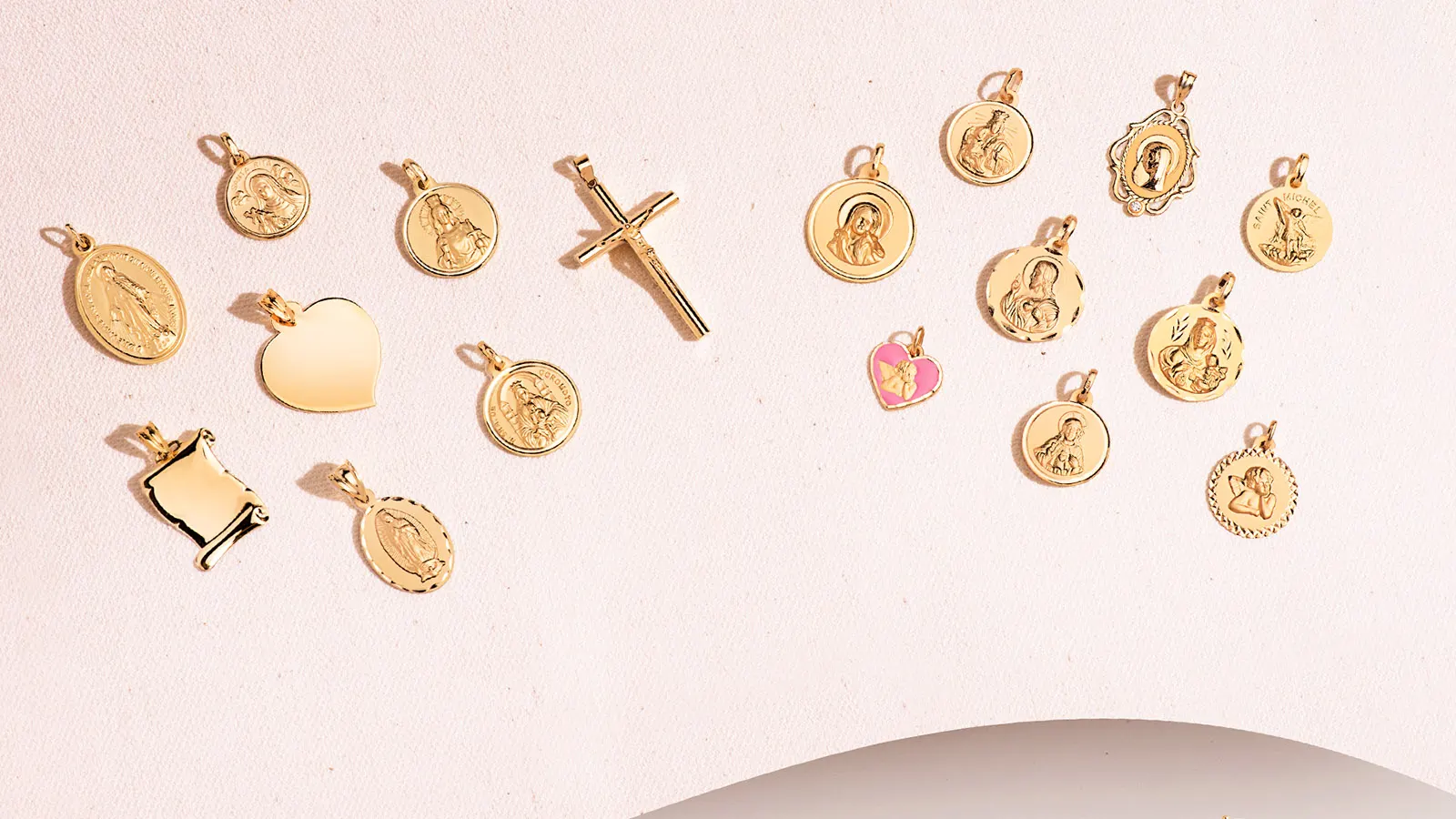
The interesting thing about all these medals is that, beyond theology, they serve a very earthly function: they provide a sense of companionship and protection in an object that fits in the palm of your hand. It doesn't matter if they are worn for family tradition, deep faith, or simply because they are liked as a piece; the truth is that they still have a firm place in jewellery stores, as important gifts, and around the necks of many people who, with or without a rational explanation, feel a little better accompanied.
You may also like