María Bianc, raised in Rivas-Vaciamadrid, has performed with her group Olivia is a ghost at the Electric Picnic festival in Ireland, sharing the lineup with Fontaines DC and Gorillaz. The band, reformed in 2026, was the only Spanish act at the event.
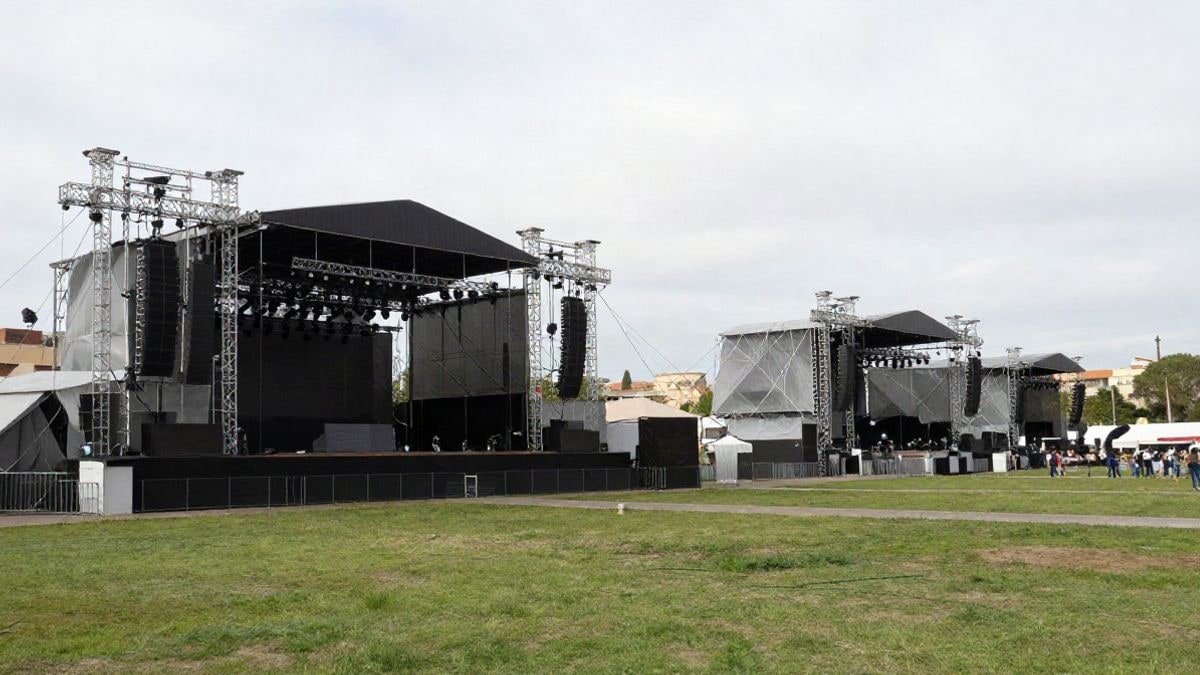
María Bianc, known in Rivas-Vaciamadrid as Merce, took to the stage this summer at the Electric Picnic, one of the largest music festivals in Ireland. She did so leading her band Olivia is a ghost, which opened the concerts on the final day, Sunday, August 30, the same day Fontaines DC closed the festival. The festival attracted 70,000 spectators from August 28 to 30 in the meadows of Stradbally, in the heart of the island.
The performance came about with an email that María sent to the festival's musician Jerry Fish: "Hello, Jerry, we are Olivia is a ghost, the next Fontaines DC of Anglo-Saxon music. If you don't include us in this year's lineup, you'll regret it." The response came quickly: "I love your energy. Welcome to the next Electric Picnic".
Olivia is a ghost was the only Spanish band on the lineup, which also included Van Morrison and Gorillaz. The group was formed in 2018 by María and Marcos de López, a bassist from the Aluche neighbourhood, whom she met while working in a department store on Madrid's Gran Vía. After disbanding in 2021, they recorded the album 'Bees are dying', released in 2023.
In 2024, María moved to Dublin and turned the streets into her stage. "The street is absolute freedom. Every day is different. You choose where you want to be and what you want to do. Although it also rains, it's cold, or you occasionally face challenging characters," she explains from her Irish home. There, she crossed paths in early 2026 with Irish drummer Rory Lahart and Roman guitarist Riccardo Militerno, with whom she reformed the group. Marcos flew in from Madrid to join this new phase. Their songs are already playing on Irish radio, and their schedule is filling up with offers, some from London.
The music of Olivia is a ghost addresses social issues. "We have very few love songs. The lyrics refer to socially relevant topics. We care about the world we inhabit. We aspire to a fairer society that respects the planet, kinder to people. Music is something political. We talk a lot, for example, about climate change or mental health," the vocalist points out. Regarding her own experience, she adds: "Today I can say it: I spent part of my adolescence in the Hospital Niño Jesús, diagnosed with anorexia and depression. From 16 to 21, my life was a hospital."
María grew up in Rivas-Vaciamadrid, where she studied at Jarama school and Europa high school, and was a student for a year of flute at the Municipal School of Music. She remembers weekends of jamming at the Casa de la Música, La Casa+Grande, and the Social Area of Parque de Asturias. "It's my safe place. There I am Merce, that's what they call me. When someone calls me Merce, it means I'm home, in Rivas," she states. Her dream is "to play one day at the Rivas festivities and have all my friends there."
You may also like