The City Council of Aranjuez has begun preliminary work to recover the Mill and the Bridge Viewpoint, a historic site on the banks of the Tagus River opposite the Royal Palace, with €350,000 in regional funding.
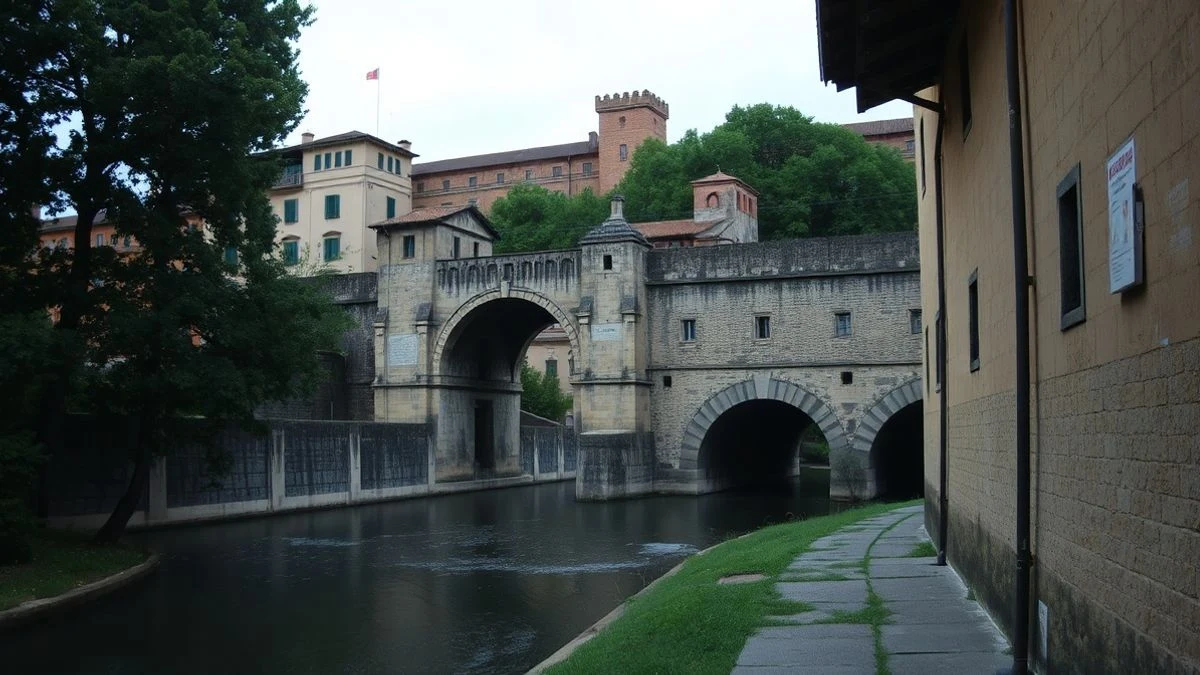
The City Council of Aranjuez has initiated preliminary actions for the rehabilitation of the Mill and the Bridge Viewpoint, a space of great heritage value located opposite the Royal Palace and on the banks of the Tagus River. The first works, which are already underway, consist of clearing the surrounding area, conducting an archaeological study, and consolidating certain walls.
The mayor of Aranjuez, Miguel Gómez Herrero, visited the start of the works and emphasized that “the recovery of the Mill and the Bridge Viewpoint represents a decisive step in returning to the riverside community a space of enormous historical, landscape, and heritage value.” The mayor insisted that it is about recovering “part of our identity” and enhancing a unique site opposite the Royal Palace, “so that it can be enjoyed by both residents and visitors.”
The rehabilitation project, whose drafting has already been tendered, will be developed in four phases, with a forecast of executing one phase per year. The first phase will address the drafting of the project, the archaeological intervention, and preliminary actions for the demolition of added elements, clearing, and conditioning of the surroundings.
The initiative has funding of €350,000 from the Community of Madrid, aimed at the recovery and enhancement of this historical space. The goal is that, once all phases are completed, the site can be visited and enjoyed by the residents of Aranjuez and by tourists who come to the Cultural Landscape, declared a World Heritage Site by UNESCO.
The origins of the flour mill date back to the Renaissance, when Juan Bautista de Toledo designed the dam now known as the Palace Dam to facilitate the navigability of the Tagus River. Over the centuries, it underwent various modifications and became the only mill of its kind that remained operational until the 20th century.
Currently, the preserved archaeological remains correspond to two parallel channels built of brick, part of the sluices that regulated the entry of water and the parapet over the river, elements that constitute an important testimony to the hydraulic heritage of Aranjuez. This rehabilitation aims to improve its conservation and contribute to enhancing one of the most representative sites of the Cultural Landscape of Aranjuez.
You may also like