Móstoles will experience a partial solar eclipse today with a 99.9% obscuration, the largest in the peninsula since 1912. The Town Hall reminds residents of the rules for observing it without damaging their eyesight.
Móstoles is preparing to witness the most anticipated astronomical phenomenon of the year this afternoon: a solar eclipse that will reach a 99.9% obscuration in the municipality. The last total eclipse visible in the Iberian Peninsula dates back to 1912, according to historical records.
The eclipse will begin in Móstoles at 19:36, reach its peak at 20:32, and end at 21:16, according to data provided by the Ministry of Science, Innovation and Universities. During this interval, the moon will pass between the sun and the earth, almost completely blocking sunlight.
In light of the anticipation, the Town Hall of Móstoles has issued a series of recommendations for residents to enjoy the spectacle without risking their visual health. The main warning is that one should never look directly at the sun, not even with binoculars, telescopes, or cameras that do not have approved solar filters.
For direct observation, only specific eclipse glasses that are approved and in good condition are valid. Conventional sunglasses do not provide sufficient protection. Minors wishing to observe the eclipse must do so under the supervision of an adult.
This phenomenon will be visible partially throughout Spain, but in Móstoles, the obscuration will be nearly total, resulting in a notable darkening of the sky for a few minutes. Experts point out that in the next three years, a trio of eclipses will occur (2026, 2027, and 2028), an exceptional sequence that will place the country at the centre of global astronomy.
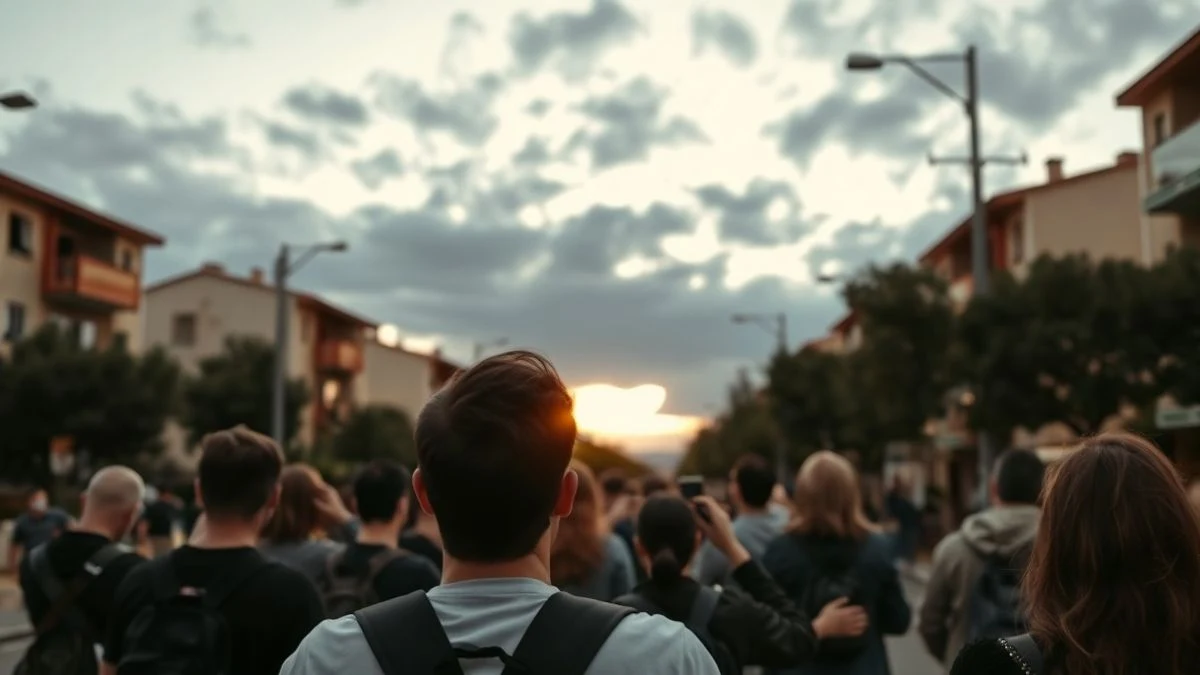
For those who wish to experience it with others, the Town Hall recommends finding a place with a clear horizon to the west, as the eclipse will be visible late in the afternoon. The next astronomical event of this magnitude will not occur for decades, making today a unique opportunity for enthusiasts and the curious.
You may also like