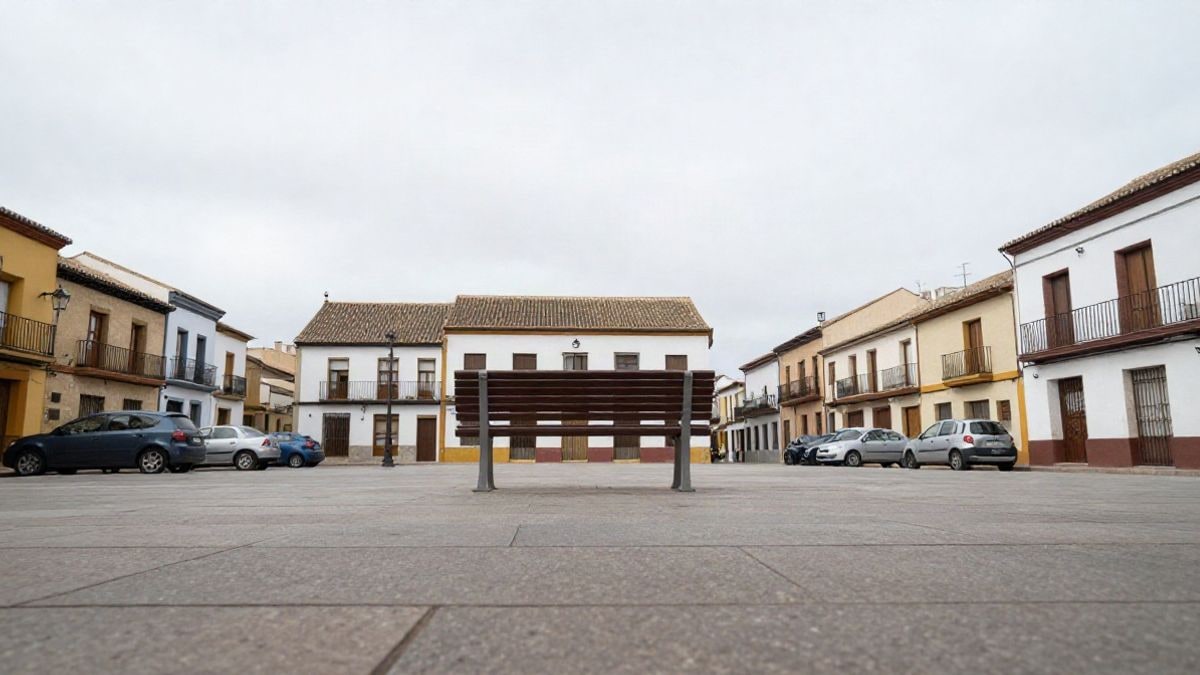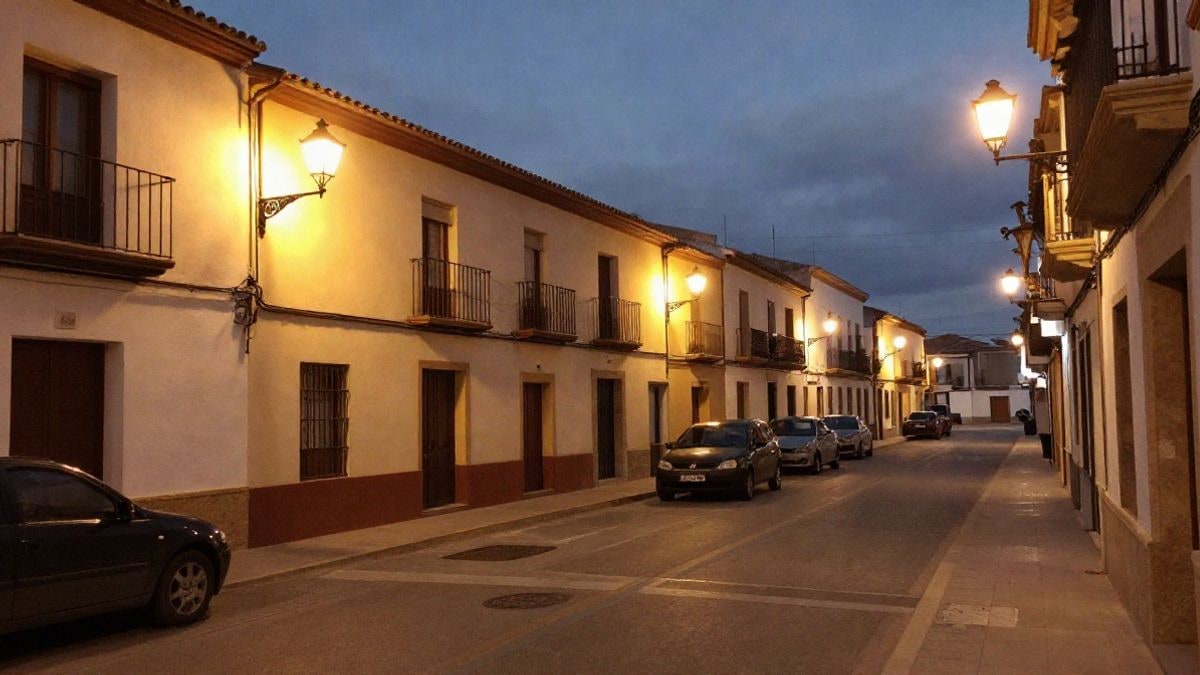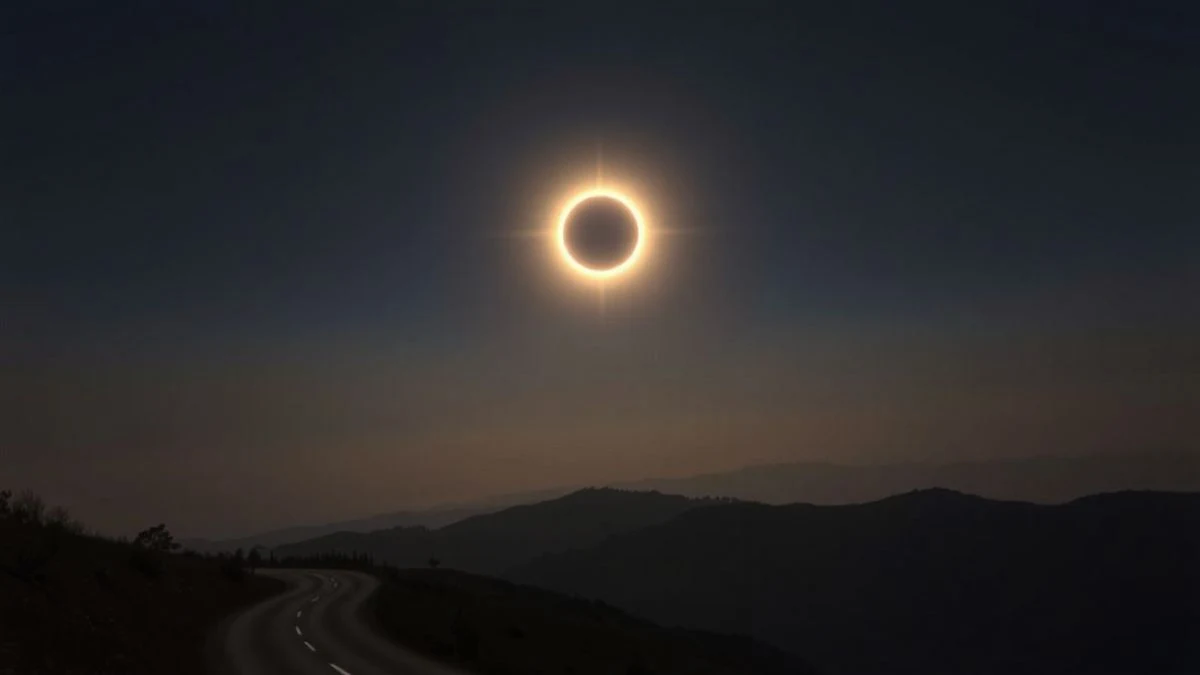
Redueña will be one of the locations in the Community of Madrid from which the total solar eclipse on August 12, 2026, can be observed. Totality will last just one minute, and special protection will be required for viewing.
On Wednesday, August 12, 2026, Redueña will become one of the best spots in the Community of Madrid to witness a total solar eclipse. The phenomenon will begin at 19:36 and reach its totality phase at 20:31, when the Moon will completely cover the solar disc for approximately 1 minute and 10 seconds.
The complete eclipse will last 1 hour, 40 minutes, and 46 seconds, and the Sun will set at 21:16. The maximum obscuration will occur at 20:31:43, with the star at an elevation of just 7.45 degrees above the western horizon, necessitating the search for a high and clear location.
The urban centre of Redueña is located in a valley, so the terrain may hinder the view of the Sun, which will be very low in the late afternoon. Therefore, it is recommended to ascend via the Portillo road towards Cabanillas, up to the area of the livestock crossing. There, elevation will be gained, providing a more open line of sight towards the west-northwest.
The reference coordinates for observation are 40°49’26.2″ N, 3°36’17.6″ W, within the municipality of Redueña. It is advisable to arrive early, park without blocking the way, and respect existing paths and signs.
Weather Forecast
According to AEMET's forecast, the scenario for that afternoon is clear, with temperatures ranging from 18 to 36 degrees and a 0% chance of precipitation. However, the prediction may vary in the days leading up to the event, so it is wise to check it before heading out and to bring water, sun protection, and appropriate clothing for waiting.
Safe Viewing: Special Glasses Essential
One must not look directly at the Sun at any time during the partial phase, not even with conventional sunglasses, homemade filters, X-rays, or any other improvised system. It is essential to use eclipse-specific glasses that are in good condition and certified for solar observation.
Before using them, check that they are free of scratches, holes, or damage. The glasses should be put on before looking at the Sun and removed only after averting your gaze. If using binoculars, a telescope, or a camera, a suitable solar filter must be placed at the front of the instrument; one should never look at the Sun through an optical device without protection.
During totality, protection can only be removed when the solar disc is completely covered and must be put back on before any part of the Sun reappears.
What Will Be Visible
The eclipse will start as a partial one, with the Moon progressively hiding the Sun. At 20:31:08, totality will begin, and for just over a minute, the sky may darken significantly. The maximum will occur at 20:31:43, before totality ends at 20:32:18. After that, the Sun will gradually re-emerge until it approaches the horizon.
The low height of the Sun will make the landscape and horizon essential parts of the observation. In addition to the glasses, it may be useful to bring a chair, water, and a camera prepared in advance, always with appropriate solar filters.
Astronomical calculations and information can be consulted on the National Geographic Institute's eclipse portal.
You may also like