On a Saturday at nine in the evening, a restaurant is a risky sport. Orders get lost along the way, a table that no one knows is free, and a waiter searching for the last ticket like someone looking for their car keys. This is where good POS software for hospitality stops being a technological whim and starts making the difference between serving calmly or improvising in a panic.
And we’re not just talking about taking payments. The traditional cash register had one function: to open the drawer and pull out the ticket. The modern one has to think with the business, coordinate front of house and kitchen, and provide the owner with real data to make decisions without guessing.
What a POS Should Solve in a Restaurant
The difference between a cash register with pretensions and genuine restaurant management software becomes apparent as soon as the venue fills up. The former records what has already happened. The latter controls what is happening: what has been ordered, which table is waiting for the bill, which product is about to run out, and who has reserved for ten o'clock.
A serious management system brings together sales, orders, tables, reservations, stock, and customer database in one place. When everything lives in different tools, there’s always someone copying data from one screen to a notebook, and that someone is usually the owner at two in the morning.
Sales and Orders Without Friction
The digital order is the first great relief. The waiter takes notes at the table, the order reaches the kitchen or bar instantly, and the days of deciphering a colleague's handwriting are over. Fewer mistakes, fewer plates returning to the kitchen, and fewer arguments about who ordered the salad without onions.
Moreover, the information is recorded in real-time. It shows what sells the most, at what time, and at which table, something no notebook has ever managed to explain.
Tables and Reservations Under Control
A digital floor plan allows you to see at a glance which tables are occupied, which are waiting for dessert, and which are free. If you add a reservation management system connected to the same system, the classic double booking that ends with two groups staring at each other at the door disappears.
It’s a silent improvement, but the whole team appreciates it: the floor manager makes better decisions, and the customer waits less, which is ultimately what matters.
Stock and Customers: What You Can't See from the Floor
A restaurant loses money in unglamorous places. In products that expire in the fridge, in drinks that no one restocks on time, or in the star dish that runs out on a Friday due to lack of foresight. A real-time stock control helps to know what is available, what is lacking, and what should be ordered before it becomes a problem.
With customers, something similar happens. Knowing who returns, what they usually order, and how often they come back allows you to build loyalty wisely instead of throwing promotions blindly. Spoiler: the regular customer who receives personalised treatment comes back more and recommends more.
A Cloud-Based System That Fits on an iPad
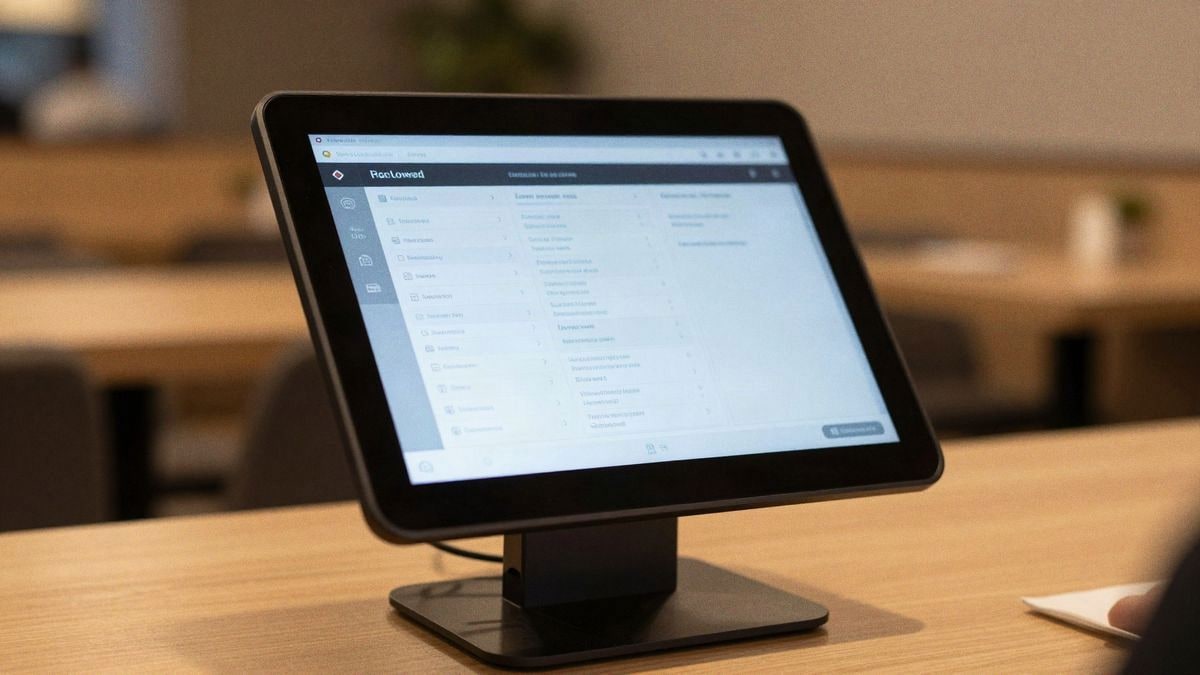
One of the great advantages of modern POS systems is that they operate in the cloud and can be managed from mobile devices like an iPad. This means less heavy hardware, less cabling, and an installation that doesn’t require turning the venue into a server room.
With a device in hand, the waiter moves around the room, takes the order, and processes payments right at the table. It’s more agile for the team and much more convenient for the customer, who doesn’t have to wait for someone to return from the bar with the card reader.
Web Back-Office to View the Entire Business
What happens on the floor is only half the story. The other half is managed from a web back-office, where reports, products, prices, menus, and configurations are centralised. If the business has more than one location or combines hospitality with retail, being able to view everything from a single panel is a huge advantage.
No more asking a manager every week to send “the sales Excel.” The numbers are there, updated, and can be checked from home, although it’s still advisable not to do so during dinner.
Integrated Modules to Digitise Operations
The most useful trend is that of modular ecosystems. It starts with a solid POS base and adds pieces according to what each business needs: reservation management, inventory control, loyalty, takeout orders, analytics, and more.
The key is that all modules communicate with each other. A POS that doesn’t understand stock forces duplication of tasks, and an isolated reservation system ends up being just another tab that no one looks at. When everything is connected, digitalisation stops being a project and becomes the normal way of working.
Before choosing, it’s wise to ask some practical questions. Can I use it from an iPad? Do I have a web panel to see everything in one place? Do reservations, stock, and customers integrate without extra work? Does it grow with me if I open another location or change format? If the answer to all is yes, the system will likely handle the next Saturday at nine in the evening better, which is, after all, the only test that matters.
You may also like