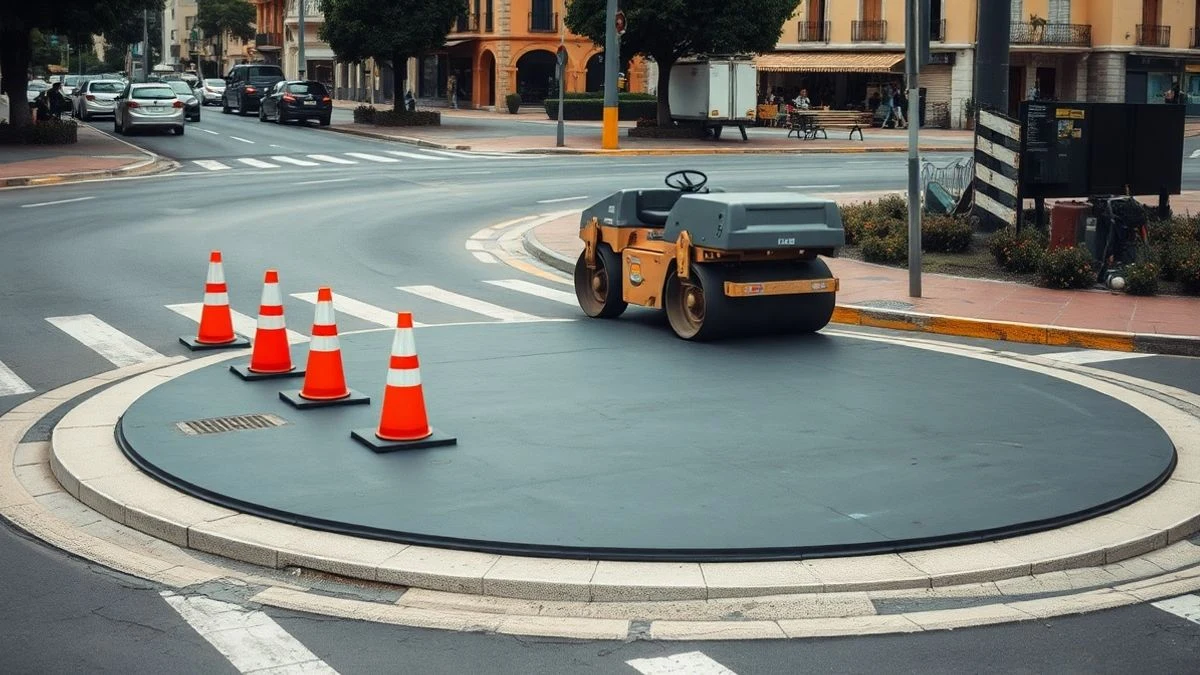
The Alcalá de Henares City Council continues its Urban Maintenance Plan with work on the BRIPAC roundabout, where the surface damaged by heavy vehicle traffic will be repaired.
The Alcalá de Henares City Council, through the Department of Works and Urban Maintenance, has launched a new initiative within the Urban Maintenance Plan. This time, the work focuses on the BRIPAC roundabout, in the section owned by the municipality, where the surface in the most damaged areas due to heavy traffic will be repaired.
The intervention will take place in the coming days and will affect the section towards the A2 bridge, one of the busiest access points in the city. According to the City Council, the works aim to improve traffic conditions and enhance road safety in this area.
The plan, with a total budget of €550,000, includes small maintenance and repair works on road surfaces, pavements, and other public road elements. Work has already been carried out on Alalpardo, Paseo de Pastrana, Dámaso Alonso, Carmen Descalzo, and Santiago streets, and now it is the turn of the BRIPAC roundabout.
The Councillor for Works and Urban Maintenance, Antonio Saldaña, has highlighted that “we continue to advance in a plan of actions that allows us to respond to the conservation needs of our streets and public spaces.” He added that these types of interventions are “essential to keep the city in good condition and ensure more comfortable and safe mobility for residents and visitors.”
During the works, which will last several days, there may be temporary disruptions to traffic and bus services. The City Council assures that the inconveniences will be properly signposted to minimize the impact on drivers.
The plan prioritizes areas with greater wear due to continuous use or high traffic intensity, aiming to extend the lifespan of municipal infrastructures and prevent further deterioration.
You may also like