Las Rozas Innova and the technology company Schréder have launched a pilot with three SENSE ONE multisensors in the town centre. They will collect data on traffic, parking, and pedestrians until February 2027.
Las Rozas de Madrid has initiated a pilot project for urban innovation that combines artificial intelligence and the Internet of Things (IoT) to map activity in the heart of the urban area. The initiative, driven by Las Rozas Innova and the technology company Schréder, with the support of the Town Hall, is being developed at the intersection of Real and Cruces streets, Avenida de la Iglesia, and Cuesta de San Francisco.
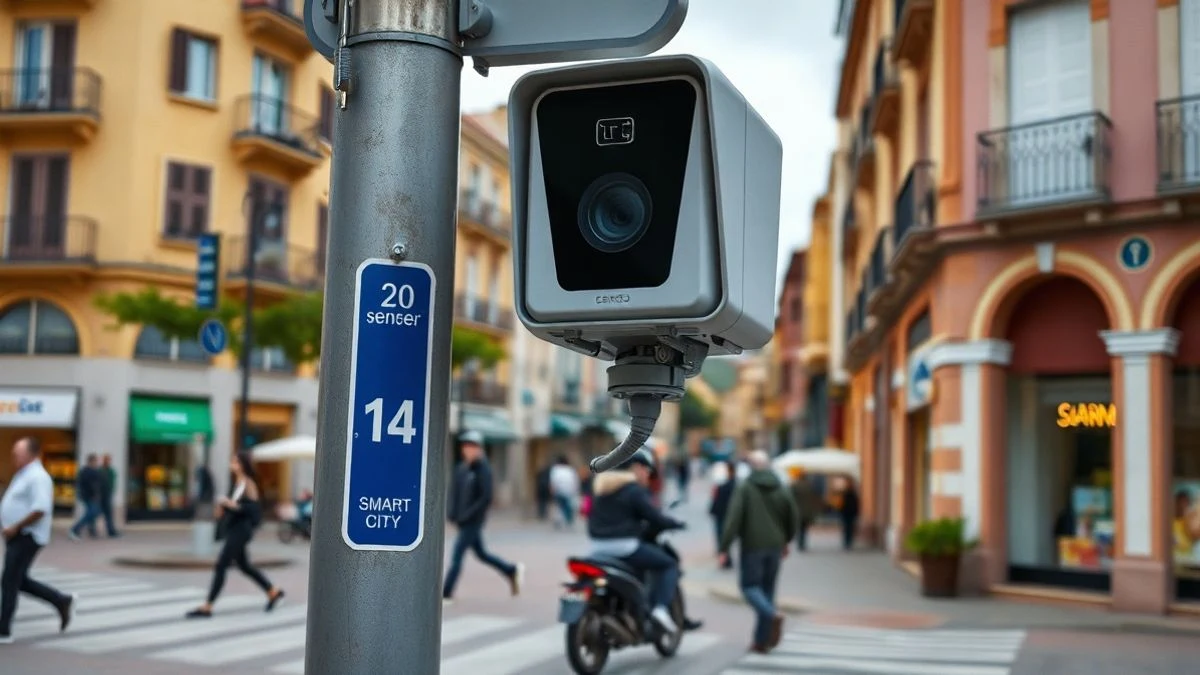
There, three SENSE ONE devices have been installed, an intelligent multisensor capable of measuring mobility flows, occupancy of parking spaces, environmental variables, and patterns of public space usage. The devices will continuously collect data until February 2027, during which their real utility will be evaluated.
The Mayor of Las Rozas and president of Las Rozas Innova, José de la Uz, explained that the goal is to "know and validate an innovative Smart City technology, capable of providing precise information on how urban spaces are used, facilitating data-driven decision-making to improve mobility, accessibility, and quality of life in the city."
The system will allow for counting and classifying vehicles, pedestrians, and scooters, measuring speeds, analysing the use of crossings and pedestrian paths, and generating heat maps with influx patterns. It will also provide real-time data on car turnover and parking occupancy levels, which can help adjust future mobility or loading and unloading policies.
One of the distinguishing aspects is that the information is processed locally using Edge Computing, meaning that the artificial intelligence operates within the sensor itself without sending raw data to external servers. Anonymisation is applied from the outset and transmission is encrypted, as detailed by the council, to enhance protection against unauthorised access.
The pilot starts with a limited number of sensors strategically placed in the commercial axis of the centre. The idea is that if the results are positive, the solution could be expanded to other areas of Las Rozas. "Collaboration with innovative companies to test solutions in real environments is one of the hallmarks of Las Rozas Innova," emphasised De la Uz, who sees these trials as a way to "strengthen the municipality's positioning as a reference for attracting talent, companies, and high-impact technological projects."
During the testing phase, residents passing through the area will not notice changes in their daily lives: the sensors are compact and integrate into urban furniture. The first results and conclusions of the study will not be known until the data collection period ends, expected in the first quarter of 2027.
You may also like